Whole Life Costing for Infrastructure Assets
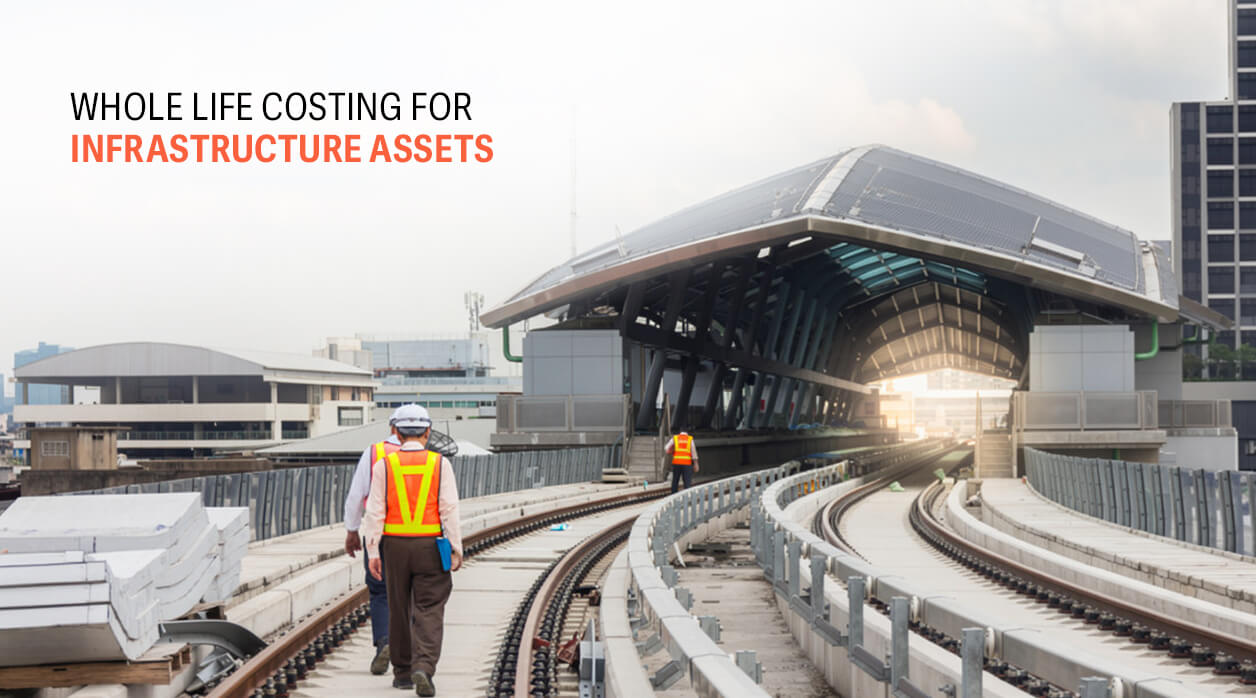
Whole life costing on metro and rail programmes is usually run at network level, where civil structures, track and depots dominate the cost model. The equipment inside those structures is bought on a different logic. Rolling stock tenders often carry lifecycle cost clauses, but these are generally expressed as fleet-level guarantees on energy consumption and maintenance cost. They rarely reach the component decisions that produce those figures. Station HVAC and depot machinery are frequently bought on purchase price alone. Whether a supplier designs in-house or buys product engineering services, the choices that fix maintenance intervals, energy draw and component life are made against the tender, and lifecycle cost passes to the operator largely unexamined.
Standards cover the method. ISO 15686-5 applies life-cycle costing to buildings and constructed assets, and IEC 60300-3-3 covers equipment and systems. On most programmes, though, the analysis runs after the equipment specification closes, which limits it to forecasting costs it can no longer change.
Where Each Element of Whole Life Cost Is Fixed
The whole life costing framework Tooltech applies to infrastructure assets separates total cost of ownership into capital cost, operating cost, energy and CO2 cost plus carbon emissions impact. Lifecycle cost models tie those elements together. Mapping each element to the stage at which it is decided shows who holds the cost.
| Cost element | Stage where it is largely fixed | Party holding the decision |
| Capital cost | Design scope, then tender award | Supplier’s design sets the cost base; owner sets the price paid |
| Maintenance cost | Equipment detail design | Supplier’s design team |
| Operational energy and CO2 | Equipment specification and system design | Supplier, within the owner’s specification |
| Replacement cycle | Component selection and design life | Supplier’s design team |
| Carbon emissions impact (embodied) | Material choice and manufacture | Supplier’s design and sourcing team |
None of the rows sits fully with the owner, and capital cost is the only one the owner sees clearly at award. Maintenance, energy and replacement costs are settled inside a supplier’s design office, often against a brief that states no lifecycle cost target. The maintenance figure follows from access clearances, fastener choice, component commonality and the number of distinct spares a depot has to stock. Each of those is a drafting decision.
Operational energy follows the same pattern. Traction, auxiliary and station HVAC loads are fixed by the supplier’s system design, while the owner meets them years later as a tariff line in the operating budget. The associated CO2 is often reported against a sustainability target owned by a different department.
Writing Lifecycle Targets into Product Engineering Services
Value analysis and value engineering can already weigh cost against function over an asset’s life, and Tooltech runs VA/VE as part of its mechanical engineering work. On equipment programmes the exercise is often run against unit cost, because unit cost is what the brief measures. Moving the target to lifecycle cost changes which options win.
The trade-off only holds when the owner’s lifecycle model and the supplier’s design review use the same assumptions on duty cycle, maintenance regime and analysis period. When those assumptions differ, both parties can defend their own numbers and still disagree on the total. Analysis period alone can reverse a ranking between two design options. Agree those assumptions before concept design starts.
Mismatched design lives cause a separate problem. When components carry different design lives, replacement campaigns fall at intervals that do not align with planned maintenance windows. Each campaign carries possession or depot downtime cost that appears nowhere in the supplier’s quote.
Where design and O&M are contracted separately, lifecycle cost has no owner between the design office and the depot. Tooltech’s collaboration with the Hoermann Group covers rolling stock design as well as O&M assessments.
What Manufacturing-Stage Inspection Shows About Operating Cost
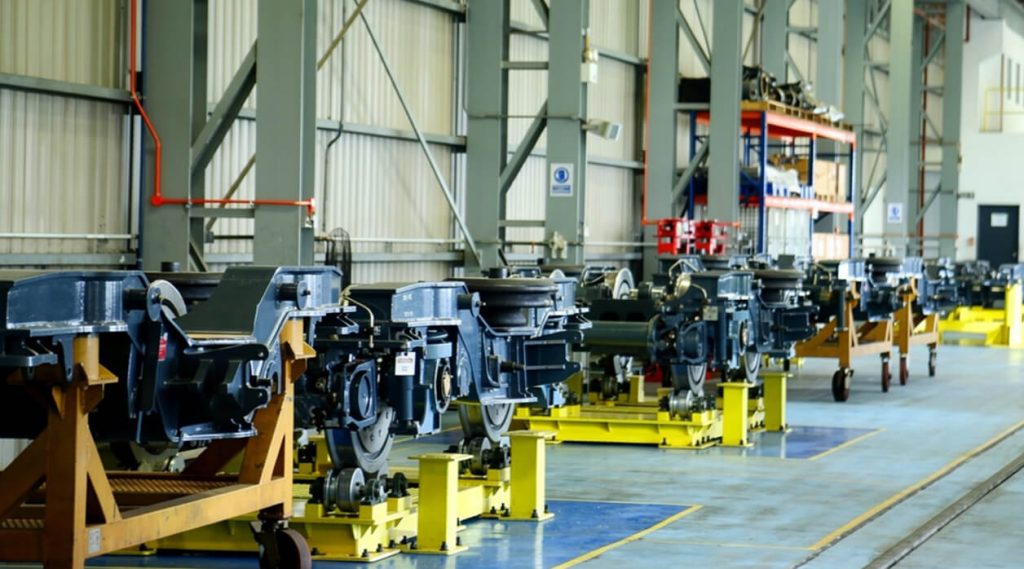
Tooltech’s quality inspection scope for rail covers sub-assemblies such as underframes, sidewalls, end walls and roofs, along with wheel sets, complete bogies and bogie load testing through to carbody and complete cars. The same scope extends to witnessing functional and performance tests, auditing non-conformities through to resolution and periodic progress reporting. Wheel sets and bogies in particular carry maintenance cost for the life of the fleet. A non-conformity missed at sub-assembly stage resurfaces as depot maintenance cost, usually at a higher rectification cost than it would have carried in the factory.
Moving Lifecycle Cost into the Equipment Contract
The first change sits in the contract. Put lifecycle cost targets into the equipment specification and state the analysis period and duty cycle. Then require the equipment supplier, or any product engineering services company working for it, to show design trade-offs against those targets at each review gate. Once that is in place, each row of the table above carries a target as well as an owner.
Frequently Asked Questions
How does RAMS analysis feed a whole life cost model?
On rail programmes, EN 50126 governs reliability, availability, maintainability and safety. Its reliability and maintainability figures, typically expressed as mean time between failures and mean time to repair, are the direct inputs to the maintenance line of a lifecycle model. A cost model built without them estimates maintenance from assumption. The practical risk is a RAMS case prepared for safety approval and a lifecycle model prepared for tender, each using different failure data for the same equipment.
What data does a product engineering services company need from the operator to design for lifecycle cost?
The core set is the operator’s maintenance manuals and logs, asset registers with maintenance schedules, system performance reports and spare parts inventory and procurement records. These are the same documents Tooltech reviews in an O&M assessment. Depot constraints matter as well, including lifting capacity, access routes and the skills available on each shift. A design that assumes a tool or trade the depot does not have will cost more to maintain than the model predicts.
Can whole life costing be applied to an asset that is already in service?
Yes, although the decisions it informs change. With design fixed, the model is rebuilt from operating records and the options become maintenance strategy, spares policy and the timing of upgrades or modernisation. A common output is a repair-or-replace decision for each asset class, timed against remaining design life and the cost of the next major overhaul.
This article has been contributed by Tooltech Global Engineering, a 26-year-old engineering services company headquartered in Pune, India, with offices in Germany, Finland and Sweden.
Related Insights

Knowledge Retention Challenges in Distributed Engi...
Know More
The Mechanical Engineering Work European OEMs Are ...
Know More