
Why Electrical Design Errors Often Surface During Commissioning Activities
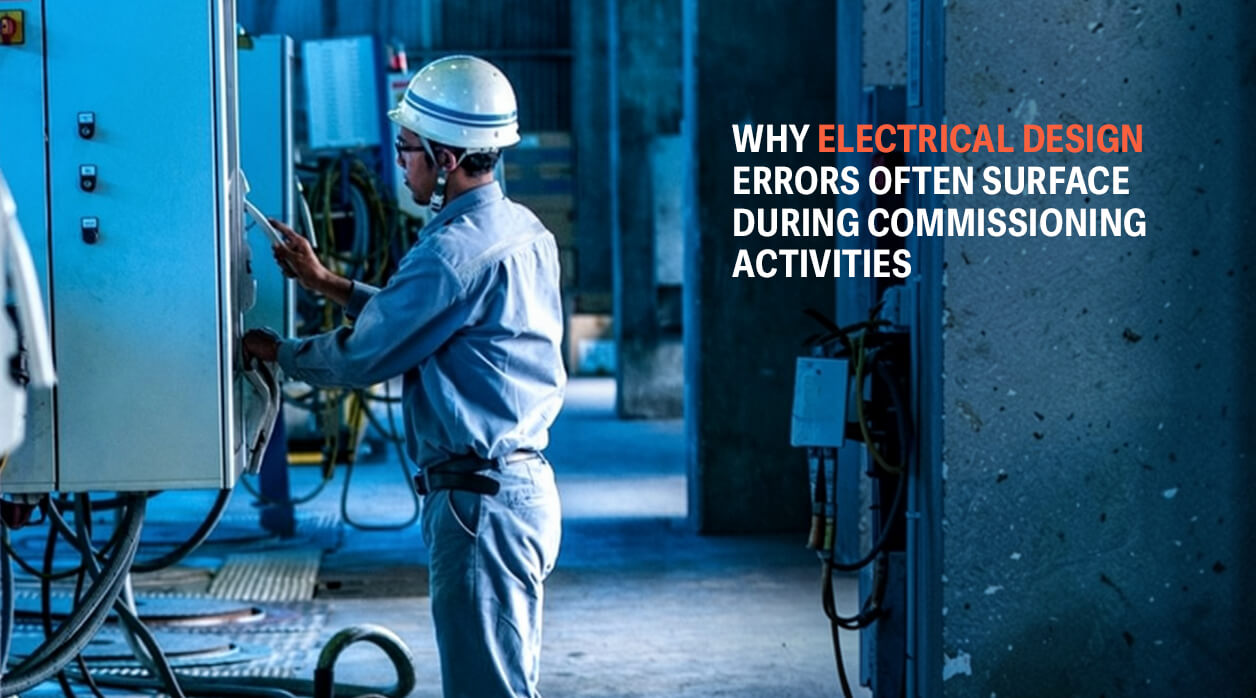
By the time a crew pulls the first wire, an electrical design has usually cleared several rounds of paper review. None of that carries over once commissioning begins, when power goes live and control logic runs against real field devices for the first time. Faults that sailed through every one of those reviews often surface within the first shift. Control system commissioning is where a design proves itself against physics, not against a checklist.
Paper review evaluates logical consistency and checks whether the schematic matches the standard or does the I/O count add up, does the panel layout fit inside the enclosure. None of that confirms how the design behaves once real cable runs introduce actual length, actual electromagnetic interference and an actual PLC scan cycle running against live inputs. A schematic is a hypothesis. Commissioning is the test.
What Surfaces When Control System Commissioning Begins
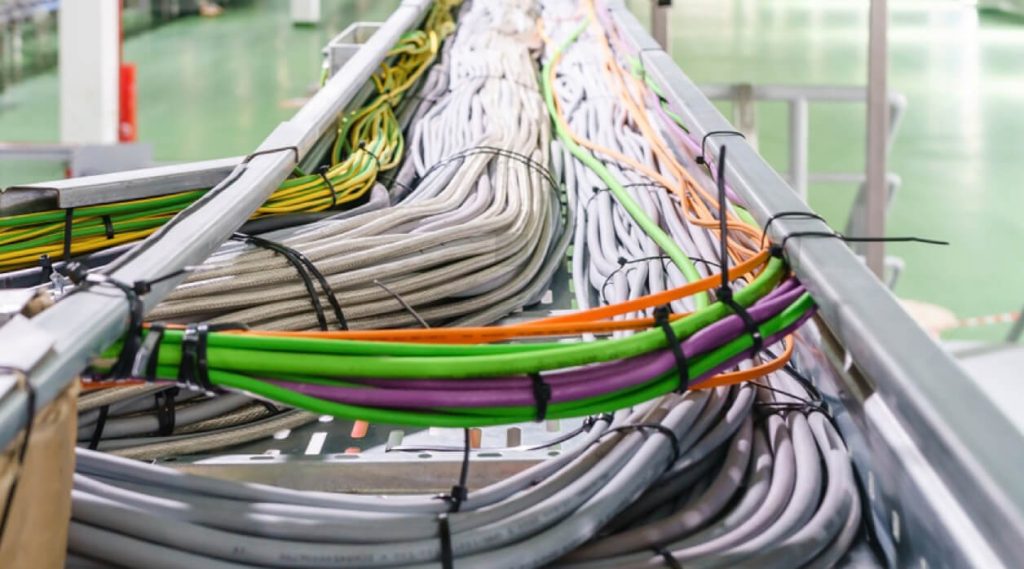
The scope that produces a commissioning-ready package is wider than the schematic alone. It includes control panel layout, wire harness design, starter and starter centre selection, and the routing of cable and cable tray around a plant that was not necessarily designed with this addition in mind. Each of those is reviewed on its own during design. They are checked together again through integrated design reviews, 3D interference checks, FAT, I/O simulation, PLC testing, loop checks and point-to-point checks before a crew ever reaches site.
Four fault categories turn up more often than any others.
- I/O address collisions, where two field devices reference the same input register because a rack expansion was never reflected upstream.
- Cable tray congestion, where routing looked clean in AutoCAD but collides with an existing tray once the panel is actually mounted.
- Safety interlock gaps, where each device checks out individually but was never sequenced against the others under live conditions.
- Grounding and EMI issues on lines carrying variable frequency drives, invisible on paper and obvious the moment a drive spins up next to an unshielded signal cable.
Machine safety logic is its own category of risk. A safety circuit that checks out on the bench, tested device by device, can still fail once the full sequence runs live, because timing between an interlock and its downstream fault reset was never modelled on paper. Field wiring debugging catches it. A schematic review does not, because a schematic review has no way to run the sequence.
On a cylinder block and head machining line built for a heavy-duty pickup truck manufacturer, commissioning covered gantry temperature compensation, SPC station programming and automatic cycle sequence validation, alongside safety interlock validation and PLC program optimisation, once the gantry, the Cognex scanners and the Profibus network were physically live together against a Siemens Sinumerik 840D SL controller. None of that scope is testable from a schematic alone.
The Cost of Finding These Errors Late
A design fault caught at this stage costs a delay measured in days, not months. The same fault, if it reaches the production ramp instead, costs line downtime, a supplier readiness question and a maintenance team troubleshooting a control panel they did not design. This is why commissioning is validation work, not a paperwork formality. It is the last point where a fault is still cheap.
Programme schedules tend to treat commissioning as a fixed, short window near the end of a project. That assumption holds when the electrical package was validated as a system, not just as a set of individually correct drawings. When it was not, the commissioning window absorbs rework it was never sized for, and that slippage moves everything downstream of it: production ramp, customer acceptance testing, handover.
Why Early Involvement from an Electrical Testing and Commissioning Company Pays Off
An electrical testing and commissioning company that only reviews a schematic on paper has no way to catch a sequencing assumption like that. The value sits in continuity. The same team that drew the panel layout also walks the field wiring, then stays through cycle testing once the machine is powered.
TIA Portal programming, panel layout and field wiring sit under the same service scope for a reason. A PLC logic error is often not a coding mistake. It is a mismatch between what the panel layout assumes about wiring and what the program assumes about I/O addressing, and catching that requires someone who can read both sides.
On a powertrain manufacturing plant commissioning project, the same team covered gantry interfacing, software loading, cycle testing, gantry system integration and automation sequencing through to final run-off. The final phase also included training the client’s own maintenance and controls engineering teams.
For a procurement lead evaluating an outsourced electrical package, the relevant question is not whether the vendor’s schematics pass review. Most do. The relevant question is whether the same organisation will be present on the floor when the panel is powered for the first time.
Paper review will keep catching the errors it is built to catch: schematic to standard mismatches, missing labels, incomplete BOMs. It was never built to catch a sequencing assumption or a grounding fault that only appears once real current runs through real cable. That is what commissioning is for. The earlier that team sits inside the same schematic that eventually reaches the panel shop, the fewer surprises show up on the first day power goes live.
FAQs:
Why do design errors that already passed review still show up once commissioning starts?
Paper reviews only check static data: schematic standards, enclosure fits, and I/O counts. They cannot simulate a live PLC scan cycle or test how safety interlocks interact in real time. Commissioning closes this gap by testing the live sequence against physical reality.
Is control system commissioning the same as testing individual panels and devices during installation?
No. Bench testing confirms individual devices work in isolation. Commissioning confirms the entire system works as a whole against real-world physics like actual cable lengths, electromagnetic interference, and live safety sequences. A circuit can pass every bench test and still fail a full sequence run.
What should we actually look for in an electrical testing and commissioning company?
Continuity. A vendor reviewing paper schematics cannot catch real-world sequencing assumptions. Look for a single, integrated team that draws the panel layout, walks the field wiring, and runs the cycle testing, rather than three separate teams passing off the project between phases.
Related Insights

Balancing Weight, Durability, and Manufacturabilit...
Know More
What a Product Engineering Services Company Actual...
Know More