
Digital BIM Workflows for Infrastructure Projects
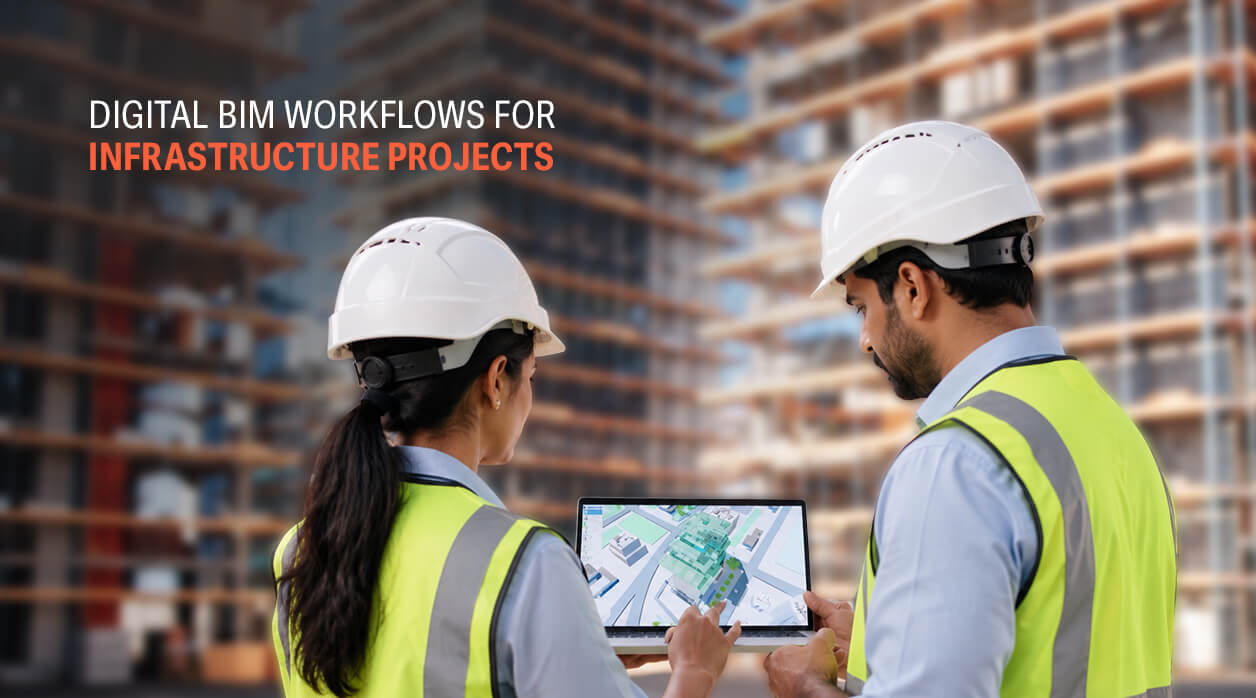
Every design change inside a BIM model has to be manually carried into the project schedule and cost baseline. On a metro extension or a highway package, a revised station box, piling sequence or service diversion sits in the model until someone identifies it and works out its effect on sequencing and cost. The change reaches the control system after that review, often once the design team has already moved to the next revision. That gap between the model and the baseline is typically where cost overruns originate. Project management consulting services that treat the model and the schedule as separate deliverables have no method to catch the two falling out of sync until it shows up on site.
Where BIM and Schedule Control Meet
Tooltech’s project planning and control work on infrastructure programmes covers DPR and tender support, scheduling, baseline setup, resource planning, real-time monitoring, forensic delay analysis, support for owner’s-office decision-making at senior management levels and the digitisation of the infrastructure project itself through BIM.
Tooltech governs these together as one data environment: the model, the schedule and the cost baseline managed as a single system. That is the practical shape of PMC for construction projects at any real scale.
On any rail or metro programme with dozens of design disciplines, the volume of changes moving through the model each week can outpace a project team’s ability to track them by spreadsheet. This is why dashboard-driven project control has become standard practice across infrastructure delivery generally: forecasts pulled from live models and cost data hold more value than a static report compiled after the month closes. Dashboard management and project control are part of Tooltech’s Project Planning and Control offering for this same reason.
DPR and tender support sit in the same category for a related reason. A Detailed Project Report built on stale quantities carries that error into every commercial decision made off it, from contractor selection through to the final tender comparison. Keeping the underlying data current at the DPR stage is what makes the tender process, and everything scheduled after it, defensible later if a client questions the numbers.
Risk management works on a comparable principle in most well-run programmes: a current model lets a team price a live risk against the quantity genuinely in the model, updated as the design changes. That is why risk management, scheduling and forecasting sit inside the same Project Planning and Control category in Tooltech’s infrastructure work, managed by one team.

Digitisation Feeds the Cost and Schedule Baseline
BIM digitisation on an infrastructure project functions as much as a control exercise as a design one. Project management consulting services depend on that distinction. A model that stays current gives a scheduler accurate quantities and sequencing dependencies without waiting for a formal design freeze. A model that lags behind gives a scheduler a snapshot that was wrong the week it was issued, and everyone downstream keeps building on it regardless.
This distinction matters for EPC clients and infrastructure owners managing highways, metro extensions, high-speed rail and road packages, where design typically continues well into construction. On these programmes, a clash caught late costs weeks of rework and a re-sequenced trade schedule. A clash caught while the model is still live costs a meeting.
BIM May Not Be the Right Fit for Every Infrastructure Programme
Full BIM implementation carries real overhead such as modelling standards, coordination meetings, software licensing and a dedicated team to maintain the model. On a smaller civil works package, or a project where the design scope is largely fixed before construction starts, that overhead can outweigh what the model returns in control value. Tooltech’s civil and structural scope includes advising clients toward a tailored software solution instead of a full BIM commitment when a project’s own control needs call for it. The decision depends on what a given programme requires from its controls.
An EPC contractor bidding on a fixed-price highway package, for instance, is usually working from a design that will not change materially before construction starts. A full BIM environment adds coordination overhead without adding much to that contractor’s actual risk picture. A simpler tracking tool, scoped to the handful of variables that genuinely move on that kind of contract, does the same job for less effort.
A shipbuilding programme with a fixed hull design and a highway resurfacing project need different levels of digital scaffolding, even though both sit under the same infrastructure banner.
Where the Discipline Pays Off After Handover
Good project control continues well past practical completion. Tooltech’s operations and maintenance assessments generally involve reviewing existing O&M documentation, maintenance schedules, asset registers and system performance reports, then benchmarking the findings against industry practice. On a rapidly expanding metro network in India, an assessment run this way identified improvement areas across maintenance strategy, safety processes and organisational efficiency. Implementing the recommendations put the metro system on course to reduce operational costs by up to 10 percent and extend asset life by 25 percent. That engagement sits in the operations phase, separate from BIM modelling. The same principle applies either way: infrastructure data that stays accurate and stays in use keeps earning its value long after handover.
The infrastructure programmes that avoid the reconciliation gap are the ones where the model, the schedule and the cost baseline are owned by the same governance structure from the outset, it is a project control decision.
Frequently Asked Questions
Does PMC for construction projects require full BIM adoption?
No. Programmes can run effectively with partial or no BIM implementation, provided the schedule, cost baseline and available design data are governed through one control system. BIM adds the most value when a project’s design continues well into construction and the volume of change needs tracking at model level.
How does BIM digitisation affect delay claims and cost control on infrastructure projects?
A model that stays synchronised with the schedule gives a project team early visibility into how a design change affects sequencing and cost, before it escalates into a formal claim. Forensic delay analysis becomes a smaller task later in the programme, because the change history is already documented as it happens.
When does it make sense to move away from BIM dependence on an infrastructure project?
When a project’s design scope is largely fixed before construction starts, or when the coordination overhead of maintaining a full model outweighs what the project needs from it. In those cases, a tailored software solution built around the project’s specific control requirements can deliver the same oversight without the ongoing modelling burden.
Related Insights

What a Product Engineering Services Company Actual...
Know More
Designing Infrastructure Assets for Long-Term Main...
Know More