BIM-Driven Collaboration for Complex Infrastructure Projects
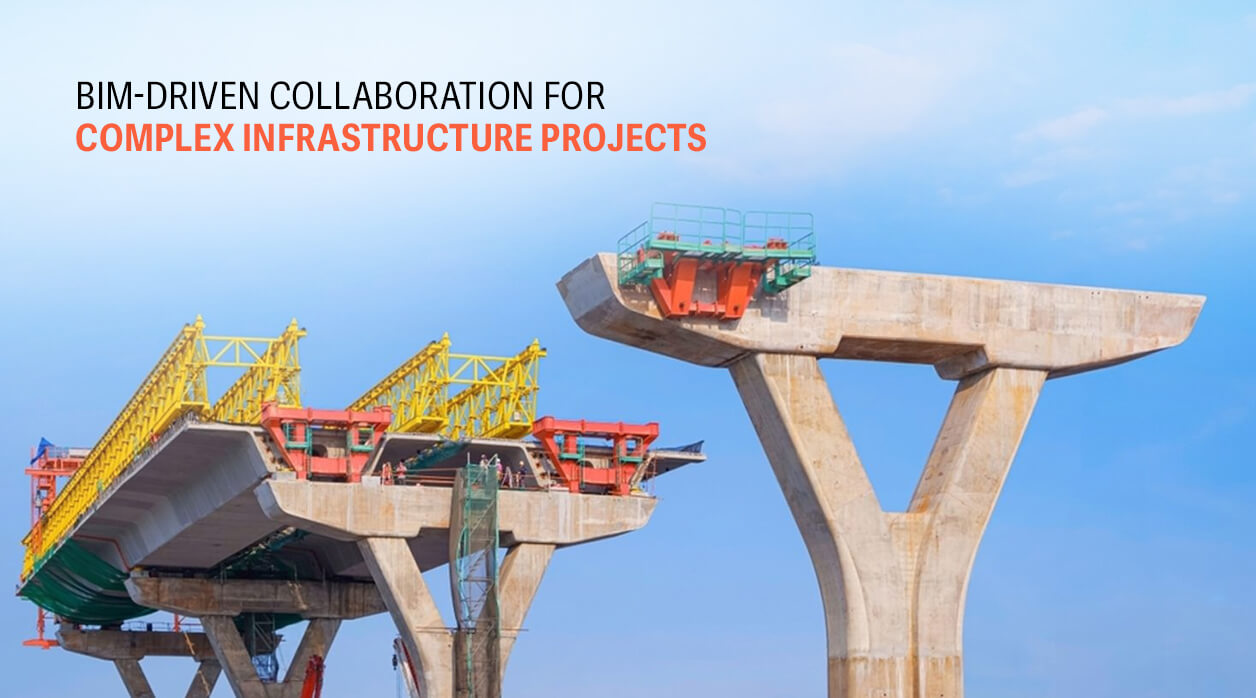
A metro line or port expansion runs on several project teams at once. Each team has its own contract, software and its own idea of a finished deliverable. Designers hand over to an EPC contractor. Fabricators and subcontractors hand detail to the EPC lead. The EPC contractor then hands the completed asset to an operator who was rarely involved while the model was being built. BIM services are tested at these transfer points, because each one moves information between organisations with different systems and priorities.
Geometry usually travels between parties intact. What drops out is the context attached to it: which clashes were settled by agreement instead of redesign, which components were substituted during procurement and which tolerances were relaxed on site. The receiving party often inherits a model that looks complete and carries no record of why it changed.
The Three Handover Points That Decide Whether BIM Services Pay Off
| Transition | Handed from and to | What changes hands | What the receiver needs from it |
| Design to build | Designers to EPC contractor | Coordinated design model, LOD 300 to 350 (where the owner’s team completes the design, lower where the EPC contractor carries detailed design) | A basis for quantities, procurement and construction sequencing |
| Build to commissioning | Fabricators and subcontractors to EPC lead | Fabrication models at LOD 400 with connection and placement detail | Confidence that off-site components will fit the installed structure |
| Commissioning to operations | EPC contractor to O&M operator | Asset Information Model with field-verified geometry, equipment data, warranties and maintenance schedules | A working asset register from the first day of operation |
Design to build: designers to the EPC contractor
The design intent model is where designers and the contractor first have to agree on what ‘coordinated’ means. A model can be clash-free in software and still difficult to build if it ignores factors such as erection sequence, crane reach or temporary works. A standard clash run checks geometry and clearances. It cannot tell whether a precast segment can be lifted into place once the adjacent structure is complete. That needs 4D sequencing.
The practical value of BIM modeling services at this stage is resolving conflicts before they turn into site instructions. On a plant layout for a press systems manufacturer, Tooltech’s team ran 3D clash detection in AVEVA PDMS to prevent future rework, with onsite and offshore engineers working closely with the client’s design team. Plant design runs on different software from infrastructure BIM platforms. The discipline carries across: interference is resolved in the model, where a change costs a revision instead of rework in the field.
Build to commissioning: subcontractors to the EPC lead
LOD 400 is fabrication grade. It carries exact placements, connection geometry and details as fine as the angle of a welded pipe joint, so that components made off-site fit when assembled. That holds only while the fabrication model and the structure on site agree. On long programmes the two drift apart as field dimensions shift and design changes reach the fabricator later than they reach the site.
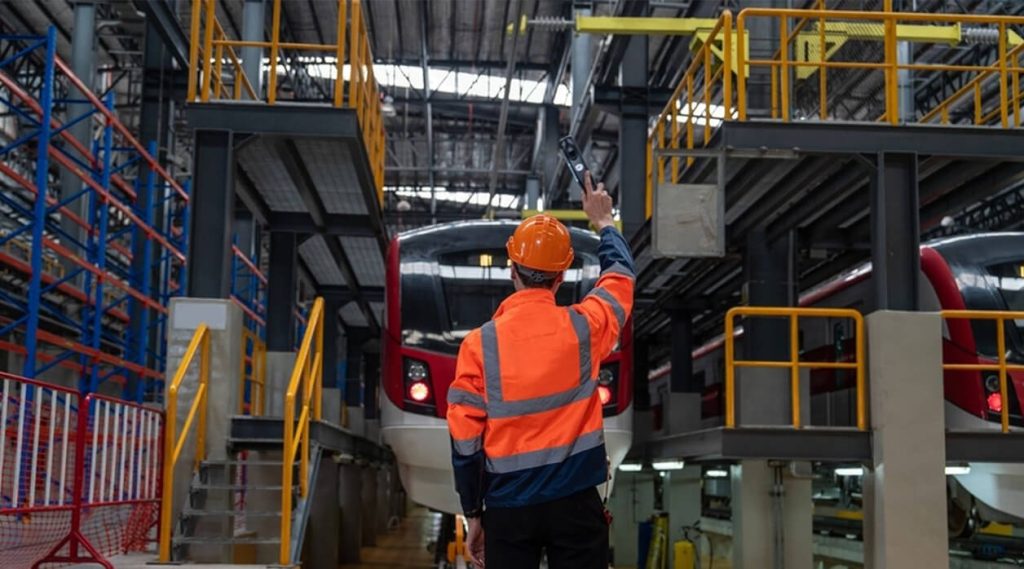
Inspection during fabrication is where much of this drift is caught. For metro train manufacturing at Sri City, Tooltech’s inspection scope ran from sub-assemblies to final testing, with non-conformities resolved in real time. Rolling stock sits outside BIM scope. The principle still applies to civil works, since a deviation recorded during fabrication is one the as-built model can reflect correctly.
What BIM Modeling Services Must Hand Over to the Operator
The final transfer differs from the first two in what the receiver can use. Maintenance software has little use for heavy 3D geometry. A computerised maintenance management system (CMMS) relies on structured records rather than visual data. It requires specific inputs, ranging from asset tags and locations to manufacturer details, serial numbers, warranty dates, spare parts and maintenance intervals.
COBie (Construction Operations Building Information Exchange) provides the framework that standardises this transfer. It strips out the graphics and organises the non-graphical asset data into linked tables, usually delivered as a spreadsheet, which the operator imports into its maintenance or facility management system. Under ISO 19650, this asset data feeds the Asset Information Model (AIM), the record the operator maintains for the life of the asset.
Handover gaps tend to surface years later, during an operations review. Tooltech’s O&M assessment starts with existing documentation: asset registers, maintenance manuals and logs, maintenance schedules, system performance reports and spares inventory records. Recommendations cover process optimisation, training, upgrades and spares strategy, along with enhanced documentation and digitalisation. In a separate engagement, Tooltech’s O&M assessment for a rapidly expanding metro network in India identified improvement areas across maintenance strategy, safety processes and organisational efficiency.
Planning Links and the Case for a Lighter Approach
Handover quality also depends on how the model is used between transfers. In Tooltech’s infrastructure planning and control work, BIM digitisation sits beside scheduling, forecasting, cost control and dashboard management. Through its collaboration with the Hoermann Group, Tooltech also works on rolling stock design, O&M assessments, factory planning and BIM modelling and integration.
There is also a case for doing less. Some asset owners lack the systems or staff to maintain a full AIM, and a model that nobody updates starts losing value on the day of handover. Tooltech’s Civil & Structural practice also helps clients move away from BIM dependence, building tailored software solutions instead. An operator with a small maintenance team and a well-run CMMS is often better served by clean, structured asset data and a lightweight tool. A federated model loses its value if the team cannot keep it current.
Infrastructure contracts routinely dictate what each party must deliver. They say far less about what the next party needs to receive. A handover scope built around the three transfer points, with the operator’s data requirements fixed before design starts, reduces the reconstruction work that otherwise falls on the O&M team long after the contractor has left site.
Frequently Asked Questions
What is the difference between LOD 400 and LOD 500?
LOD 400 holds enough fabrication and assembly data to manufacture and install a given component. By contrast, LOD 500 means the model element has been physically verified in the field against what was actually built. It represents a verification status, not just a denser level of geometric detail. Consequently, its true reliability comes down to the rigour of the site checks behind it.
Does COBie work for linear infrastructure such as rail, tunnels and highways?
COBie was developed for buildings. Stations, depots and control buildings map onto it well. Track, tunnels, earthworks and other linear assets usually need additional asset classifications. The operator should define these in its information requirements before design begins.
What is the difference between a Project Information Model and an Asset Information Model?
Under ISO 19650, the Project Information Model (PIM) is built and used during design and construction. The Asset Information Model (AIM) holds the information the operator needs to run and maintain the asset. Much of the PIM’s design and construction detail never reaches the AIM, because the operator has no use for it.
Related Insights

Engineering Document Traceability in Regulated Man...
Know More
What a Product Engineering Services Company Actual...
Know More