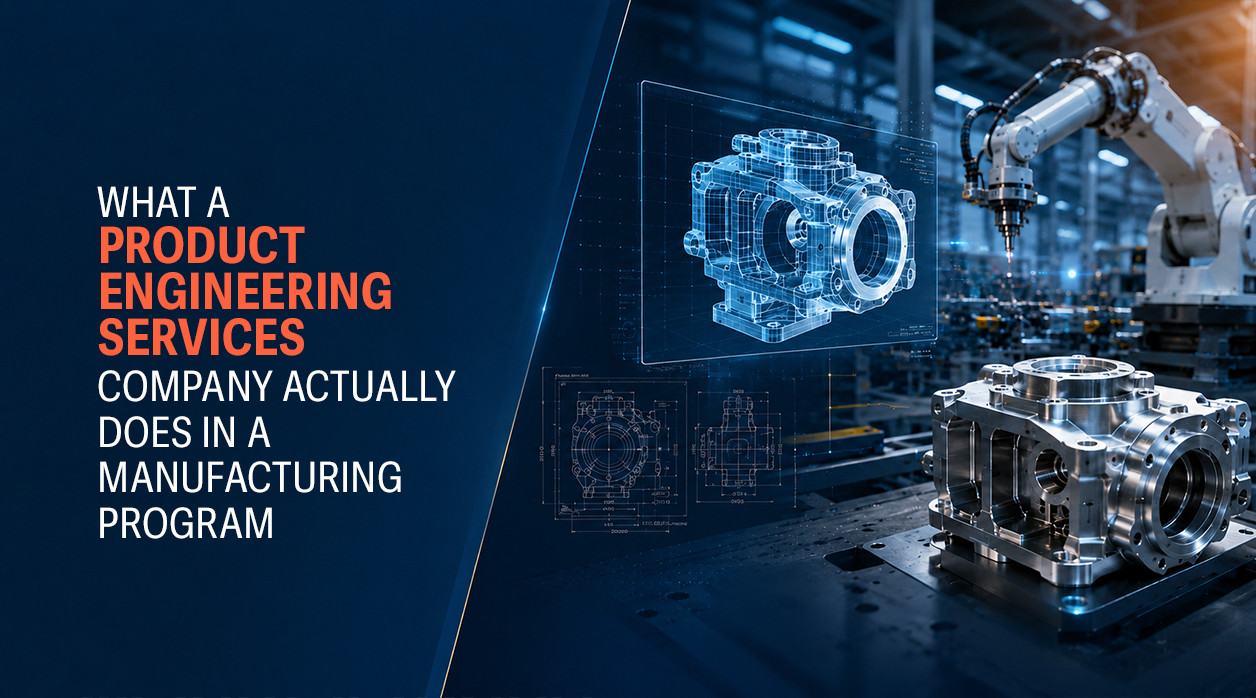
Robotics in Automotive Manufacturing: What Engineering Integration Requires
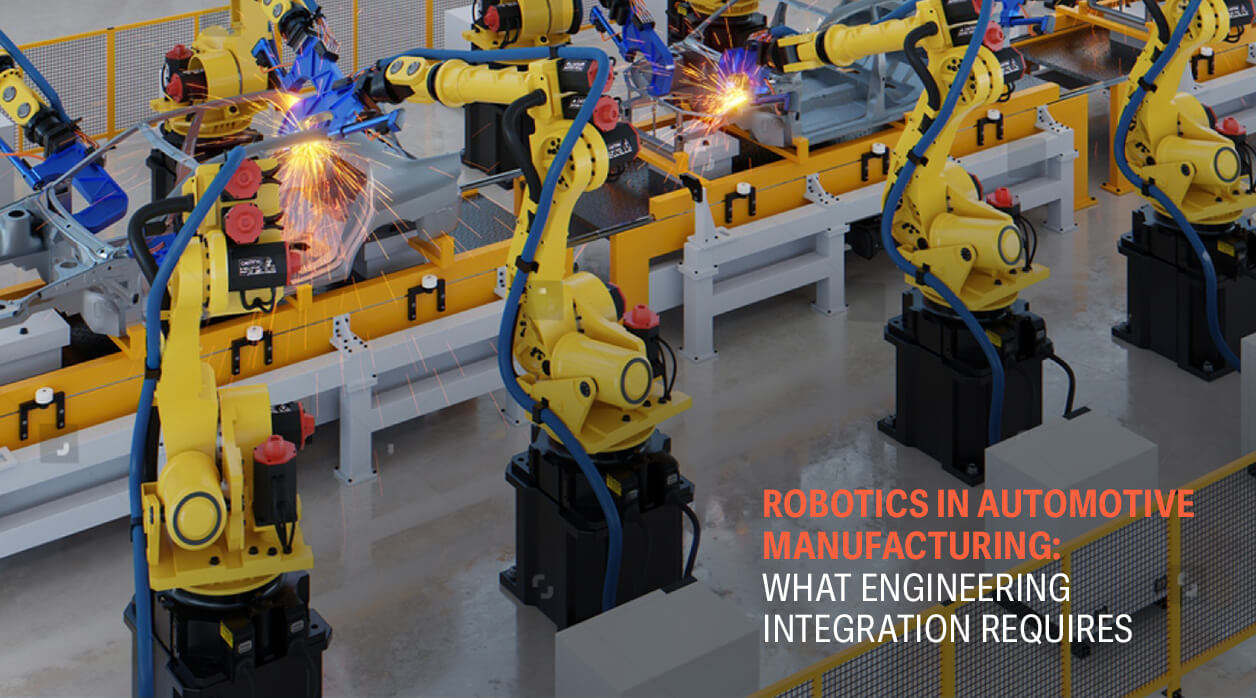
In an automotive manufacturing setup, once a robot is installed, it cannot operate on its own. It needs a path validated against every fixture and neighbouring robot in the cell, I/O wired into the line’s control architecture, and a controller integrated with the plant’s PLC before a single cycle runs live. That is the work an engineering services company delivers on automotive robotics projects. The engineering is in the trajectory, the I/O, the controller logic and the trials that make it run inside the client’s production line.
Where Robotic Integration Fails on the Automotive Line
On a real door closure line project, Tooltech’s team handled the integration work: KUKA KR210, KR510, KR1000 and KR420 robots running on KRC-2 and KRC-4 controllers, covering spot welding, handling, gluing and cutting across front and rear door assemblies. Each robot needed its trajectory optimised for the station it sat in, rather than a generic library path pulled from a catalogue. The team validated collision avoidance against every other moving element in the cell, including the neighbouring robot’s own path, then handled I/O configuration and PLC integration, before running auto trials that proved the cycle under production conditions rather than on a bench.
Most failure points in a robotic automotive cell trace back to skipping one of those steps. A trajectory that clears in simulation can still collide with a fixture that was not modelled correctly. A cycle time that looks fine in isolation can create a bottleneck once it sits inside the full line rhythm. Programme standardisation across the robot fleet, rather than one-off programming per cell, is what keeps auto trials consistent from one cell to the next.
The same integration discipline extends across Tooltech’s Factory 4.0 work: robotic offline and online programming, PLC and HMI programming and the control systems architecture that ties a cell back to the plant network. Gantries, conveyors and vision stations draw from that same control architecture, and a robot programmed without accounting for their shared timing can throw off the line’s rhythm well beyond its own station. Offline programming is what lets most of that trajectory work happen before the line is even available for trials.
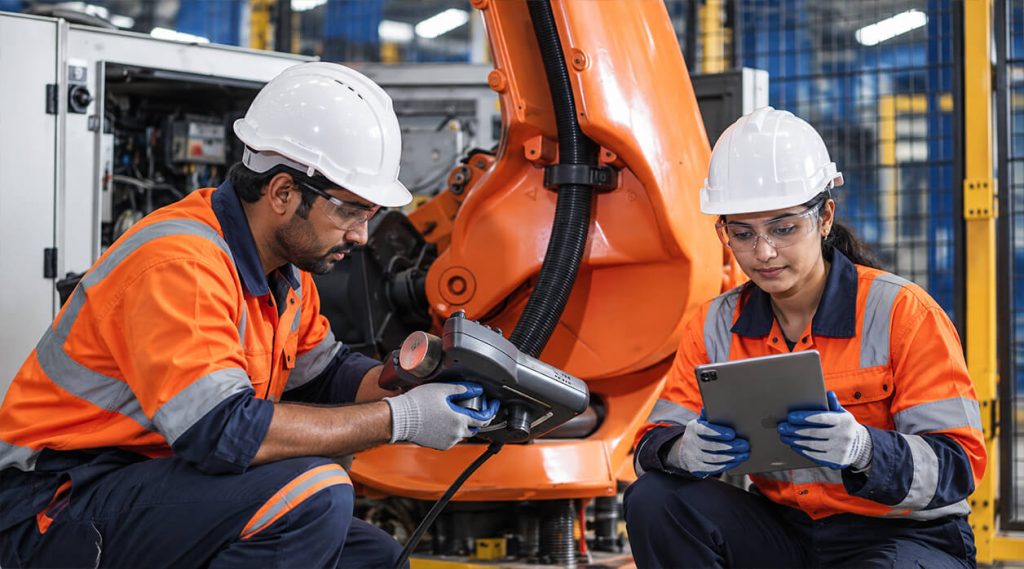
What Integration Engineering Covers on a Production Line
For an engineering services company running this work day to day, integration engineering on a robotic cell covers:
- Path programming and optimisation for each robot in the cell
- Collision avoidance validation against fixtures and neighbouring robots
- I/O configuration and PLC integration with the line’s existing control architecture
- Auto trials for production and quality proving before line handover
- Gantry interfacing and cycle testing where the cell sits inside a larger automated system
The same discipline applies before a robot ever starts moving. On a robotic BIW fixture project for automotive body assemblies, Tooltech’s team handled fixture design covering pneumatic clamping and part presence sensors for the wheelhouse, windshield and sealing channel rear assemblies, with riveting, sealing and MIG welding built into the same robotic cell layout using CATIA V5 R24. A part presence sensor mounted out of tolerance feeds a robot a part it should have rejected, regardless of how well the trajectory itself is programmed.
What Changes as a Cell Moves from Manual to Fully Integrated
| Aspect | Manual cell | Semi-automated cell | Fully integrated robotic cell |
| Path control | Operator judgement, no fixed path | Fixed path, manually triggered | Fixed path, PLC-triggered, validated through auto trials |
| Collision risk | Managed by operator awareness | Managed by guarding and interlocks | Managed by validated collision maps across all cell elements |
| Cycle consistency | Varies with the operator | Consistent within one station | Consistent across the full line rhythm |
| Commissioning effort | Minimal | Moderate, station-level | Significant, line-level: gantry interfacing, cycle testing and auto trials |
| Maintenance dependency | Operator skill | Station technician | Trained controls team and programme documentation |
Why Automotive OEMs Bring in Engineering Consulting Services for This Work
Most automotive OEMs already have people who understand robotics in principle. What they often lack is spare capacity to run path programming, auto trials and gantry commissioning for a new line without pulling engineers off a running one. That is the specific role engineering consulting services fill on these programs: dedicated integration capacity for the length of a new line’s ramp-up. For integration-heavy robotics programs, Tooltech’s Mix Model puts a lead engineer at the client’s plant as the single point of contact, with execution handled by an offshore delivery team, so the workload scales quickly without a permanent headcount commitment.
Keeping experienced engineers on the floor adds to that continuity. An engineer who has run door closure line trials before brings pattern recognition that someone encountering KUKA controllers for the first time cannot. Programme standardisation is a discipline carried from one project to the next. Rebuilding it for every new station discards experience the organisation already holds.
A robotic cell is production-ready on an automotive line only once its path has been proven under real cycle conditions, not simulated ones. Correct integration work allows the robot to operate within the line’s rhythm without incident. Incomplete integration work is the reason a line may underperform for months.
Frequently Asked Questions
How long does commissioning a robotic welding cell typically take on an existing automotive line?
The timeline depends on how many stations the cell touches and how much of the path work can be validated offline before the line is available. Path programming and simulation can run in parallel with other line work. Auto trials cannot: they require dedicated line time, and that availability is typically the harder constraint to schedule.
Do we lose visibility into programming standards if we bring in an outside partner for integration?
This depends on how the engagement model is structured. Tooltech runs integration work through onsite staffing or a Mix Model, with a lead engineer working at the client’s plant for the length of the project, keeping visibility into path programming, I/O configuration and controller settings continuous from the first trial to the last.
What is the biggest risk in a robotic cell that has not completed auto trials?
Collision risk that only shows up under full production cycle speed. A path that looks safe at reduced speed in a bench test can behave differently once the cell runs at rated cycle time alongside a second robot or a moving gantry. Auto trials exist to catch that gap before production handover.
Related Insights
Mechanical vs Electrical Engineering: Where One En...
Know More
The Mechanical Engineering Work European OEMs Are ...
Know More