Safety-Critical Engineering for Rail Systems
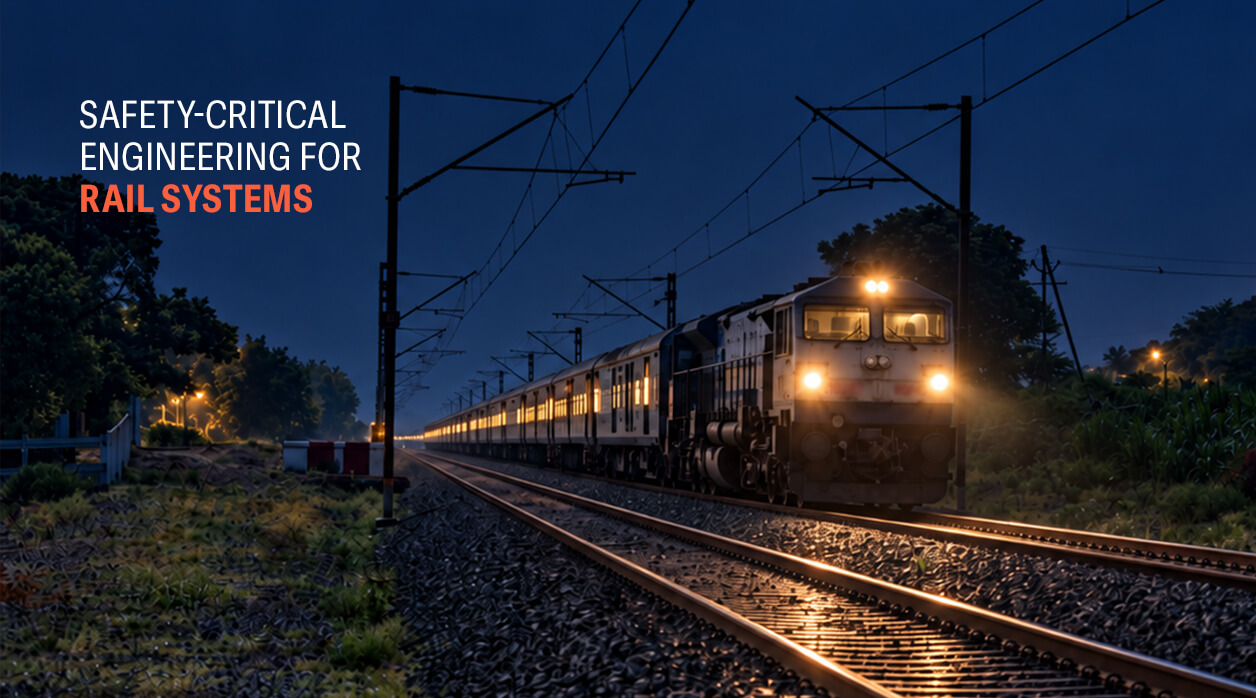
On unfenced sections of Indian track, obstacle detection still depends heavily on what the loco pilot can see from the cab. Most tracks are unfenced and unmanned. People and livestock cross them. In dense fog, the distance a pilot can see falls well inside the distance a loaded train needs to stop. The standard response is speed, and trains on affected sections sometimes run as slow as 20 km/h. That protects the margin and costs the timetable. For any engineering services company working in rail, this gap between sight and stopping distance is a useful lens, because many safety-critical gaps in rail open between stages owned by different teams.
The CENELEC standards already plan for this. EN 50126 covers the RAMS lifecycle, from concept through to decommissioning. Software falls under EN 50128. For signalling electronics, EN 50129 sets out what a safety case has to contain. Running through all three is the hazard log, which follows each hazard from phase to phase with its mitigation and the evidence used to close it. Trouble tends to start where one team hands over to another. A bogie can leave the shop floor different from the design that passed review. After years in service, an asset is seldom the one that was commissioned. A hazard closed on paper in one phase can reopen in the next without anyone logging it.
Braking Distance Is Longer Than Sight Distance in Fog
The other way to close that gap is to extend what the cab can see. Extreme Weather Vision, the pilot assistance system Tooltech co-developed with VTT Technical Research Centre of Finland, works on that side of the equation. Inputs from radar, multispectral cameras, satellite positioning data and AI software are combined to give the loco pilot real-time alerts. The narrow field of view detects obstructions up to 1.2 km ahead, before braking distance. The wide field of view covers the area close to the train and reads lineside signals through neural networks, which matters when glare washes out a signal aspect. Distance accuracy is ±0.40 m at far range and ±0.10 m at near range. It works in total darkness, fog, rain, dust and snow, and has been tested on active Indian railway tracks.
Building the software was a separate engineering problem. The software design work covered image recognition, radar integration, sensor calibration and adaptive AI models, built in Qt Creator with deep learning frameworks. Calibration deserves the most scrutiny. Two sensors that disagree about where an object sits will produce warnings that a pilot learns to distrust. Signal reading adds its own test burden, because a red aspect under low sun has to be classified as reliably as one at night.
One boundary matters for the safety case. This is pilot assistance. It alerts the loco pilot to hazards in real time, while the braking decision stays with the pilot and the train protection layer, such as KAVACH on Indian Railways. Operators should place it in their hazard analysis on that basis.
Conformance on the Shop Floor: Bogies, Underframes and Load Tests
A structural hazard designed out at the drawing stage can be built back in through a poor weld, a misaligned sub-assembly or a substituted fastener. On rolling stock programmes, inspection exists to catch that before the car runs.
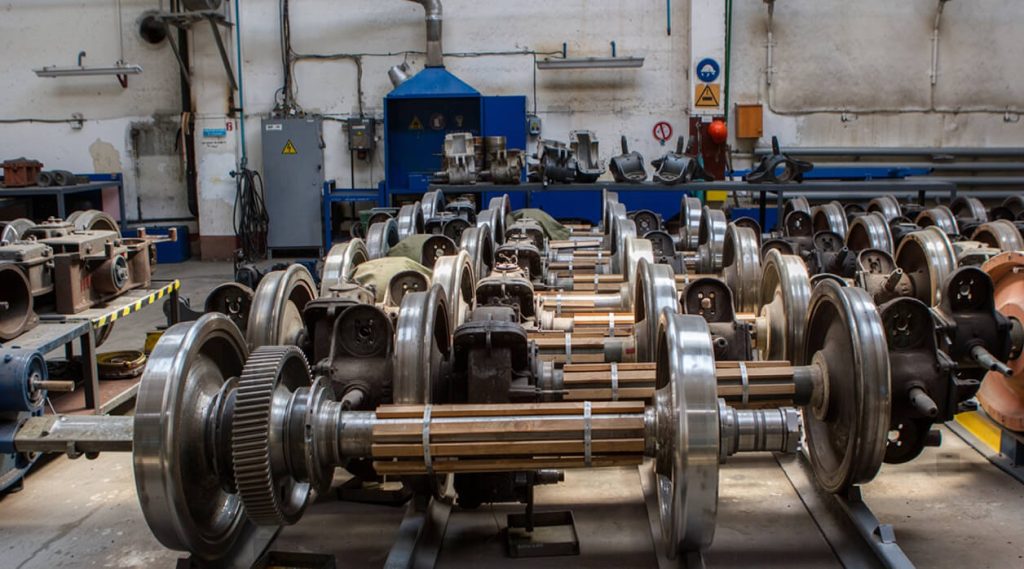
Tooltech’s quality inspection scope covers train set sub-assemblies (underframe, sidewall, end wall and roof), wheel sets, complete bogies and bogie load testing through to the carbody and complete cars. It also covers non-conformity audits, witnessing of functional and performance tests and periodic progress reporting.
The closest documented case is in-stage quality inspection for metro train manufacturing at Sri City, India. Inspections ran from sub-assemblies to final testing against approved designs and specifications. The team monitored progress, audited processes and resolved non-conformities in real time. Feedback from depot and mainline testing went back into continual improvement. Its scope is build conformance, the stage this section covers, which makes it the nearest documented parallel for this part of the lifecycle.
The Operating Phase Is Where Safety Margins Erode
From commissioning onwards, margins narrow as components wear and maintenance intervals stretch to meet availability targets. Spares are substituted when the specified part is on long lead time. SOPs drift away from the manuals they were written against. Each change is small and usually approved locally. None of them passes back through the hazard log unless someone sends it there.
An O&M assessment reviews the documents that should reveal this drift: SOPs, maintenance manuals and logs, asset registers, system performance reports and spares inventory and procurement records. Tooltech’s assessments benchmark against industry best practices and return recommendations on process optimisation, training needs, upgrades, spares strategy and documentation and digitalisation.
The maintenance log tends to be the most revealing document in the set. A difference between the interval in the manual and the interval in the log sits outside the reach of any design review.
What a Rail Operator Should Ask of an Engineering Services Company
Evidence requests work best when each one is tied to a stage. For perception software, ask for calibration records and for test results broken down by condition, since performance in clear daylight says little about performance in fog or dust. For rolling stock build, ask how non-conformities were recorded and closed, and which functional and performance tests were witnessed rather than reported. For the operating phase, ask whether the assessment compared logged maintenance intervals against the intervals in the manuals, and what was done about the differences it found.
The answers show where a partner’s experience comes from delivered programmes and where it stops at a capability statement. Each of these stages feeds evidence into the safety case. Each also has a different owner, and the hazard log is often the only document that crosses all of them. Keeping it current after every handover takes deliberate effort.
Frequently Asked Questions
Why does obstacle detection combine radar and cameras instead of relying on one sensor?
Radar holds its range in fog, smoke and darkness. Its returns give position and distance well, while telling a cow from a fallen branch is much harder. Cameras classify objects and read signal colours, and lose range as visibility falls. Multispectral imaging extends camera performance into darkness. Fusing the inputs lets each sensor cover the conditions where the other degrades.
How does whole life costing relate to safety decisions on a rail asset?
Deferred replacement and stretched maintenance often look cheaper within a single budget year. A model that brings CAPEX, OPEX, energy and maintenance planning into one total cost shows when that saving reverses. Tooltech’s whole life costing work covers total cost of ownership, lifecycle cost models and proactive planning for maintenance and asset replacement.
Does Tooltech work on rolling stock design as well as inspection?
For a rapidly expanding metro network in India, Tooltech’s operations and maintenance assessment identified improvement areas across maintenance strategy, safety processes and organisational efficiency. By implementing the recommendations, the metro system stands to reduce operational costs by up to 10% and extend asset life by 25%.
Related Insights
Project Planning for Mega Infrastructure Projects:...
Know More